The transformation towards integrated EHSQ management is transforming safety, health, quality and environment in companies, moving from reactive compliance to intelligent prevention based on data.
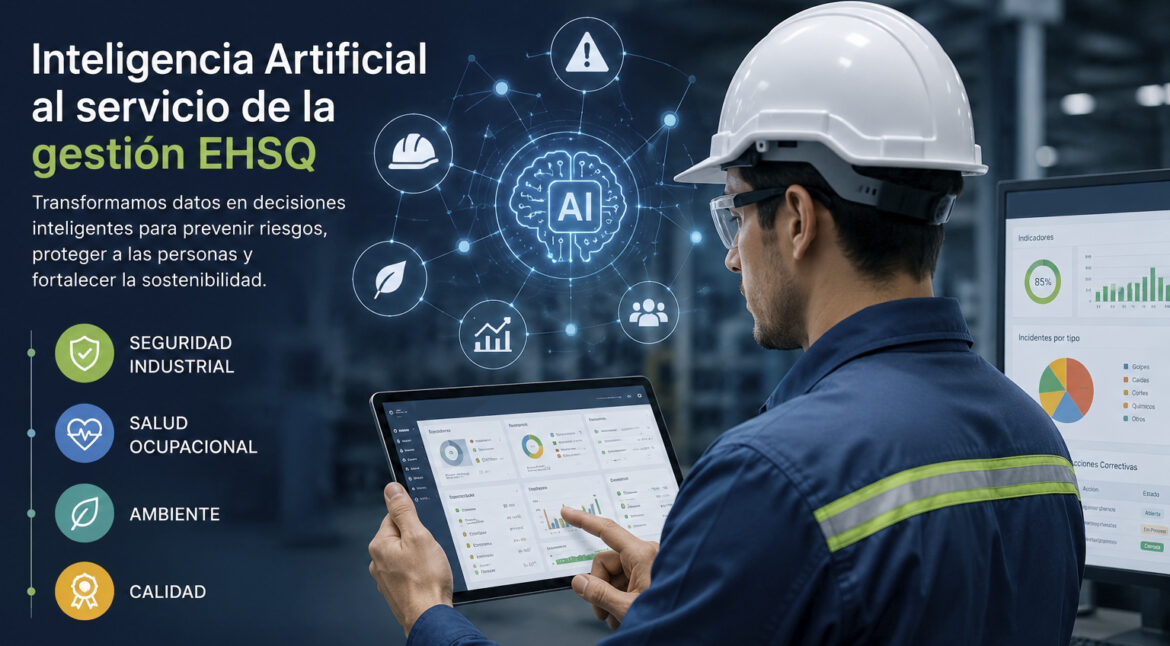
The evolution of artificial intelligence is bringing about a profound change in EHSQ management. Today, organizations can analyze large volumes of information in real time to identify risks, anticipate incidents, and strengthen decision-making in industrial safety, occupational health, environment, and quality.
In high-risk industries, accurate information can mean the difference between a safe operation and an incident with serious consequences. Document management has become a strategic element for ensuring regulatory compliance, strengthening EHSQ, HESQ, SST, and SSO systems, and ensuring that…
In the mining workplace, where extreme working conditions and inherent risks are a constant, safety is an essential pillar to ensure the continuity of operations. Every movement within the mine, whether it's a driver operating a heavy machine or a…
Industrial safety management indices are key tools for evaluating performance in terms of accident prevention and occupational risk management. These indicators provide accurate information that allows companies to identify areas for improvement and make informed decisions to mitigate hazards in their workplaces.
According to the CDC, tens of millions of workers are potentially exposed to harmful noise each year. Hearing loss is a preventable disease, and employers are responsible for providing hearing protection to workers to protect them from overexposure.
Workplace safety is a fundamental aspect of any industry. However, we often underestimate the true costs of an industrial accident. Beyond physical injuries and compensation, there are numerous hidden or indirect costs that affect businesses and society at large.