From reactive compliance to prevention: The transformation of EHSQ management in high-risk industries
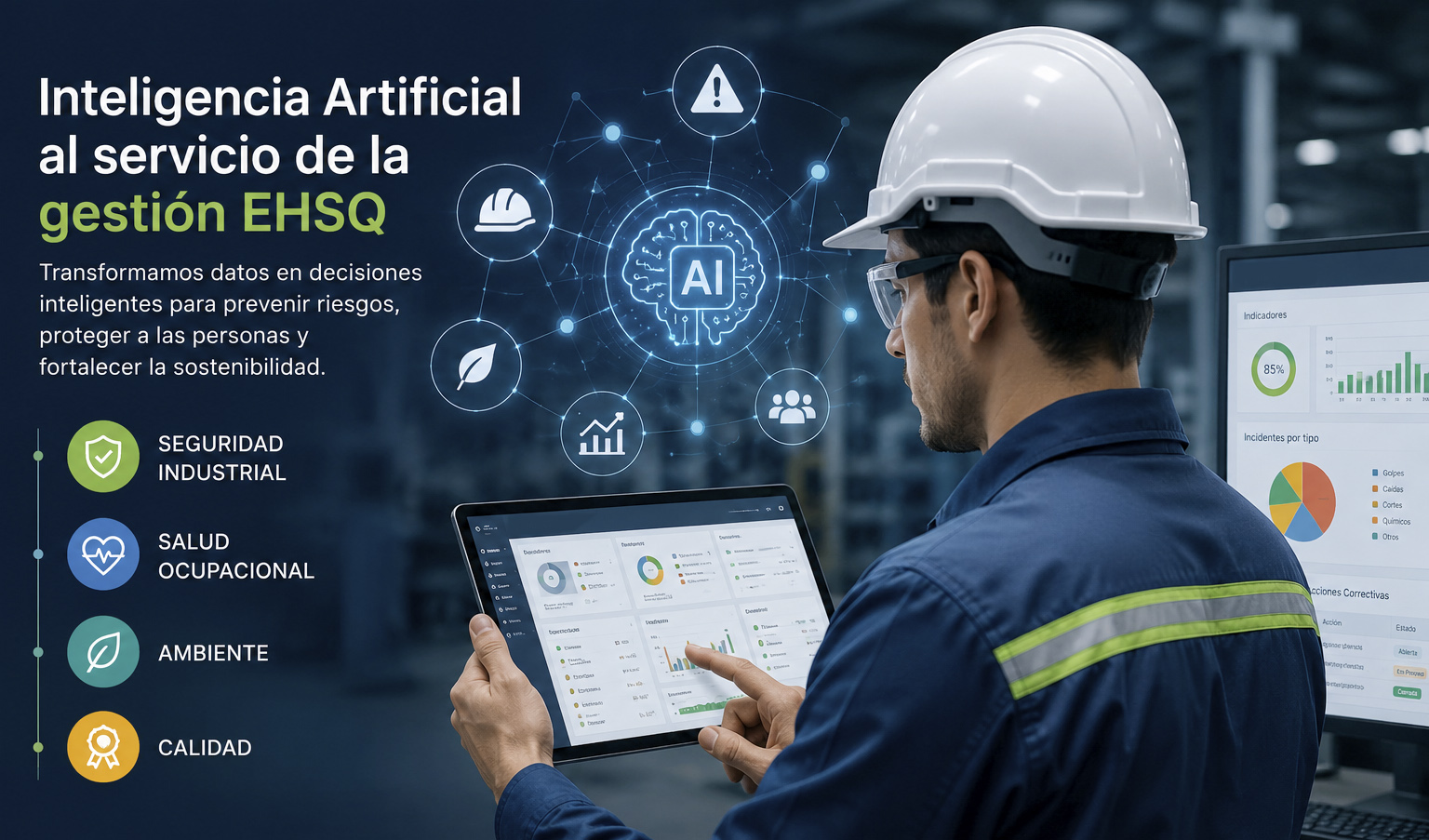
The transformation towards integrated EHSQ management is transforming safety, health, quality and environment in companies, moving from reactive compliance to intelligent prevention based on data.
For many years, the management of safety, occupational health, quality, and the environment in organizations has been based on a primarily reactive approach. Companies documented incidents, responded to audits, and corrected findings, but in many cases, the information was neither integrated nor available in real time for decision-making.
In high-risk industries such as mining, oil and gas, construction, and manufacturing, this model is no longer sufficient. Operational complexity, increased regulation, and pressure to improve productivity have led to a profound transformation: the transition to integrated EHSQ management, supported by data and technology.
Today, the question is no longer whether a company meets safety, health, quality and environmental requirements, but how quickly it can anticipate risks before they materialize.
The problem with the traditional model
In many organizations, a clear separation still exists between departments. Safety manages its indicators, occupational health administers its medical records, quality controls its processes, and environment manages permits and licenses. Although each department may be efficient individually, the lack of integration creates a structural problem: information does not flow coherently.
This translates into common situations:
Duplicate records in different formats
Information scattered across folders, emails, or isolated systems
Difficulty in building a global vision of risk
Delayed responses to incidents or deviations
Extensive and inefficient audits
When data is disconnected, the organization loses its ability to anticipate. Instead of preventing, it reacts.
Towards an integrated EHSQ vision
The EHSQ (Environment, Health, Safety and Quality) approach proposes a unified vision of organizational management. It's not just about grouping areas, but about understanding that all processes are connected by a single objective: ensuring safe, sustainable, and efficient operations.
Industrial safety can no longer be analyzed without considering worker health. Process quality directly impacts operational risks. And environmental management is closely linked to how daily activities are carried out.
Under this approach, information ceases to be an isolated record and becomes an organizational knowledge system. A security incident, for example, is not only an operational event; it can also reveal training failures, deviations in process quality, or weaknesses in environmental controls.
Digitization as a turning point
The transformation to an integrated EHSQ model is not possible without digitization. Traditional document management, based on physical files or shared folders, limits the capacity for control and analysis.
Digitization allows all information to be consolidated in a single environment, where documents, records, indicators, and processes are interconnected.
The main benefits include:
Real-time version control
Immediate access to updated procedures
Full traceability of changes and approvals
Reduction of errors due to the use of outdated information
Faster internal and external audits
But the most important value lies not only in the storage of information, but in the ability to turn data into decisions.
From operational data to intelligent prevention
One of the most significant changes in modern EHSQ management is the shift from retrospective observation to data-driven prevention.
When an organization centralizes its information, it begins to identify patterns that were previously invisible: recurring incidents in certain areas, deviations associated with certain shifts, failures in specific procedures, or trends in environmental indicators.
This analysis allows us to anticipate risks instead of simply documenting them.
For example, an increase in minor incidents can be an early sign of a failure in training or supervision. An increase in environmental reports can indicate deviations in operational control. In both cases, the key is the ability to detect trends early.
Intelligent prevention depends not only on the experience of the staff, but also on the quality and availability of information.
Impact on safety, health, quality and environment
In practice, EHSQ integration has direct effects on each of the areas.
Integration not only improves the individual management of each area, but also strengthens the entire system.
In industrial safety, it allows for improved control of critical risks, ensures the validity of procedures, and strengthens the preventive culture.
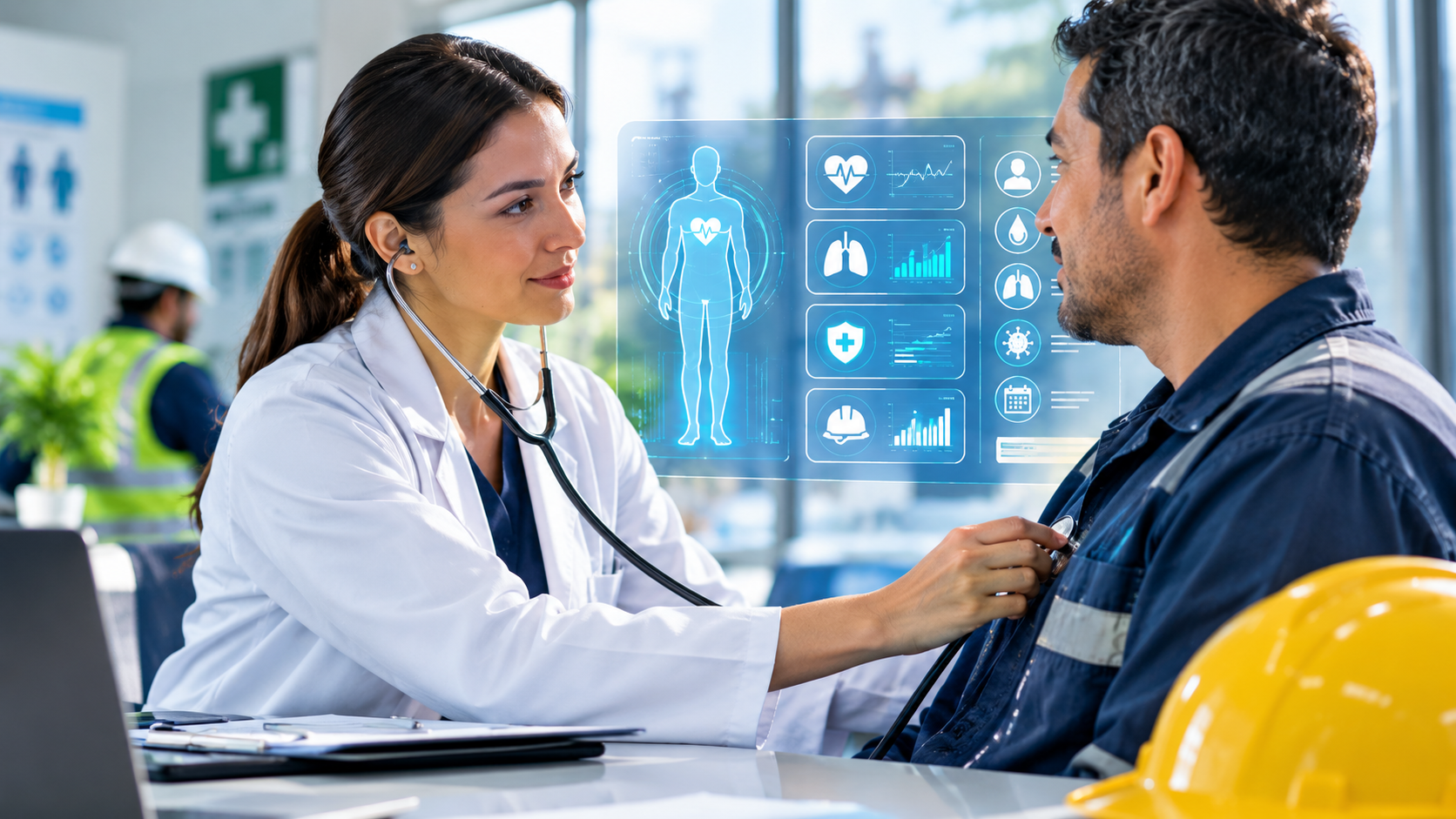
In occupational health, it facilitates the monitoring of medical conditions, exposure to risks and surveillance programs, ensuring decisions based on reliable information.
In terms of quality, it guarantees the standardization of processes, the reduction of errors and compliance with international standards such as ISO 9001.
In environmental terms, it allows for better control of permits, monitoring and regulatory compliance, reducing exposure to sanctions and reputational risks.
The cultural challenge in organizations
Beyond technology, the biggest challenge in implementing an integrated EHSQ model is cultural. Many organizations still operate under separate functional structures, where each area protects its own information and processes.
The transformation requires a change of mindset: moving from isolated management to cross-functional collaboration.
This means that information must be shared, validated, and used collaboratively. Safety cannot depend solely on the occupational health and safety (OHS) department, nor can environmental control depend exclusively on the environmental department. All processes are interconnected.
A data-driven culture becomes a key element. Decisions must be based on evidence, not isolated perceptions.
The role of technology in EHSQ integration
Specialized digital platforms have accelerated this transformation. Integrating safety, health, quality, and environmental modules within a single system facilitates traceability and information control.
Document management becomes the central focus, as it ensures that all processes operate with current and reliable information.
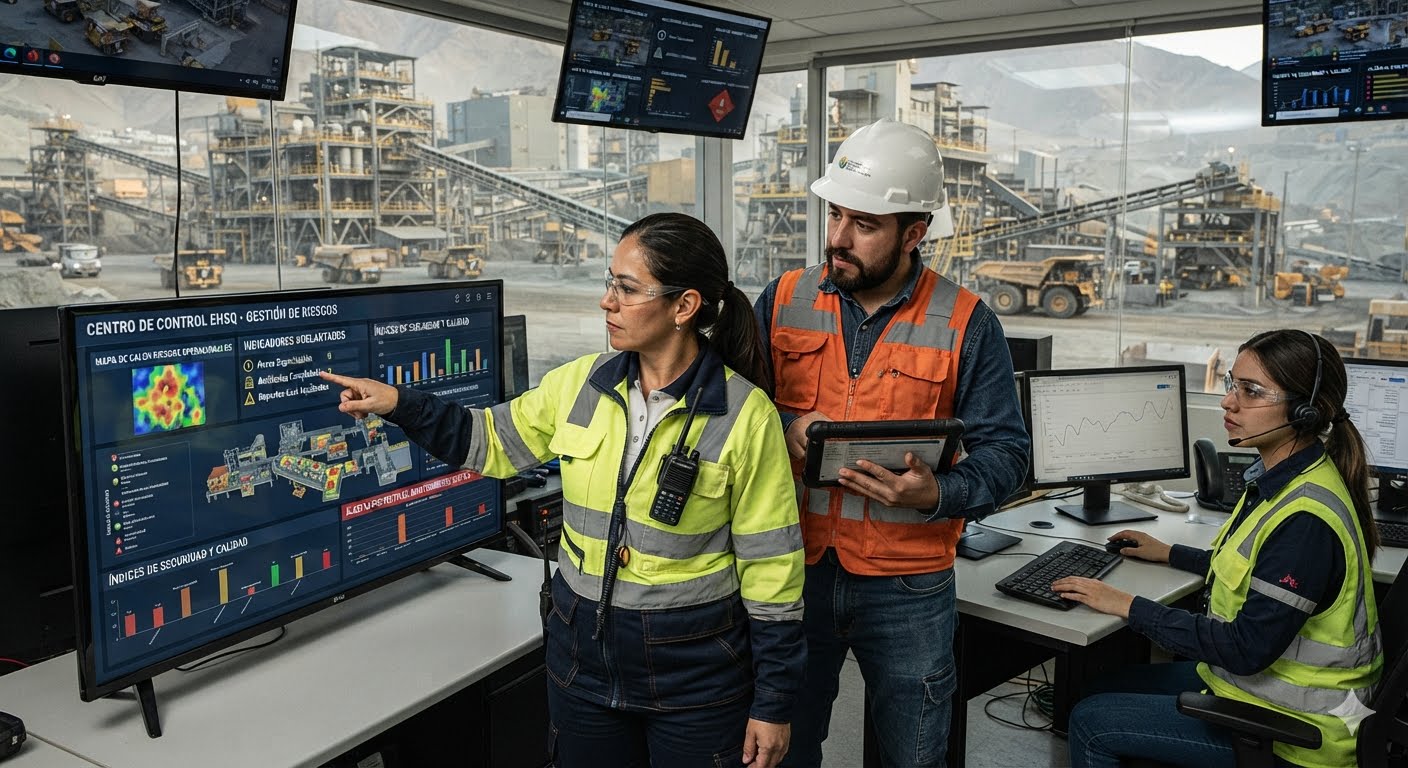
When technology is implemented correctly, the organization gains a global view of risk, with the ability to act in real time and with greater precision.
EHSQ Mantis centralizes EHSQ management on a single platform, allowing real-time control of documentation, risks, and processes related to safety, health, quality, and the environment.
It facilitates complete traceability of information, reduces operational errors, and ensures regulatory compliance in high-risk industries.
Furthermore, it automates workflows and improves proactive decision-making through reliable and up-to-date data.
Finally
The traditional management model based on reactive compliance is becoming outdated. Organizations operating in high-risk industries need to evolve toward an integrated EHSQ approach, where safety, health, quality, and the environment function as a single system.
The key lies in the information: how it is captured, how it is organized, and above all, how it is used to prevent events before they occur.
Smart prevention is not the future; it is a present necessity for any organization seeking to operate safely, efficiently, and sustainably.
In this context, digital transformation is not an end in itself, but a tool to achieve something more important: protecting people, the environment, and business continuity.