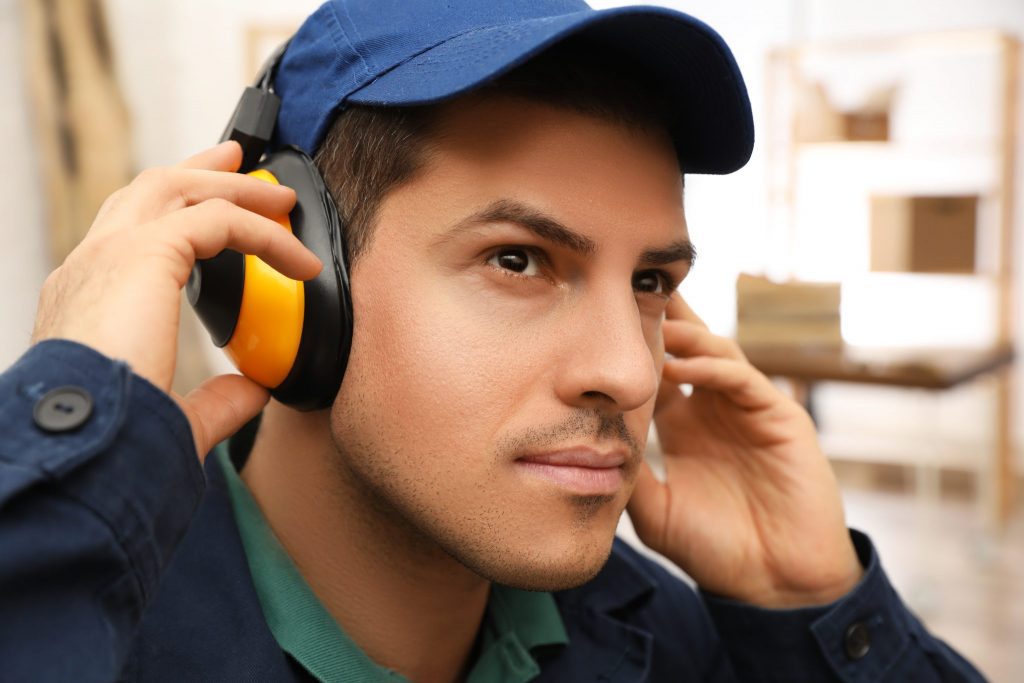
According to the CDC, tens of millions of workers are potentially exposed each year to harmful noiseHearing loss is a preventable disease, and employers are responsible for providing hearing protection to workers to protect them from overexposure.
The threshold for providing hearing protection to workers is 85 decibels (dB). If you have to raise your voice to speak to someone 1 meter away, the noise may be above this threshold. Noise can be a problem in the workplace if you experience ringing or buzzing in your ears, if you have to shout to be heard, or if you experience temporary hearing loss after leaving work. To measure noise in a workplace environment, employers can use a calibrated sound level meter (SLM). And to measure noise exposure at the individual level, the employer can provide the worker with a personal noise dosimeter.
If your workers are exposed to high noise levels, you have a responsibility to protect them from overexposure. This article provides information on hearing protection requirements in the workplace.
What are OSHA's standards for noise exposure in the workplace?
OSHA Standard 1910.95 deals with noise exposure at work. It establishes that employers must provide noise protection to their employees when sounds exceed an average of 85 dB for eight hours. Note that if sounds exceed 85 dB for less than eight hours, noise protection may be necessary. For example, exposure to a sound level of 100 dB only needs to occur for two hours to reach the hearing protection threshold. Employers should begin with administrative and engineering controls before using personal protective equipment (PPE)such as earplugs and earmuffs.
Employers whose employees are exposed to loud noise must develop and administer a hearing conservation program pursuant to 1910.95(c). The program must include sound monitoring, employee notification of the monitoring results, and audiometric testing of employees. Testing includes a baseline test and an annual test to determine whether the employee has suffered any impairment or loss.
For help assessing your workplace and determining the appropriate PPE, see our inspection templateIt will help you identify potential hazards and select the appropriate equipment to protect workers.
Supervisors may use a hearing protection safety talk to help employees take responsibility for their hearing and know when to use hearing protection.
Who should wear hearing protection?
Any worker exposed to an average of more than 85 dB over an eight-hour period must wear hearing protection. This also includes anyone with current hearing loss or impairment. Employers must offer their employees a variety of hearing protection devices (HPDs) and allow them to select the one that best suits them.
The employer must also provide annual training on the use and care of all HPDs. This training includes information on the effects of noise on hearing, the variety of HPDs available (including the advantages and disadvantages of each), the care and use of HPDs, and the purpose and explanation of audiometric testing.
What are the qualities of effective hearing protection?
Hearing protection devices are designed to reduce the sound level reaching the eardrum to less than 85 dB. Hearing protection devices are used when administrative and engineering controls are ineffective or impractical. They should be the last resort for protecting a worker's hearing.
Engineering controls modify equipment to reduce noise. Administrative controls reduce worker exposure by reducing working hours or the amount of time a particular piece of equipment can be used.
All hearing protection devices are rated according to the amount of noise reduction they provide. This rating is called the Noise Reduction Rating (NRR). It is based on the Real Ear Attenuation Test (REAT) method, described in ANSI standard S3.19-1974. However, these ratings have been shown to differ in the real world and in the laboratory where the measurements are taken. OSHA recommends that all noise reduction ratings be reduced by 50%. NIOSH recommends reducing the NRR by the following factors:
- Without earmuffs 25%
- Moldable plugs without 50%
- All other plugs without 75%
For example, if a moldable earplug claims to reduce noise by 32 dB, the actual reduction is closer to 16 dB. These adjustments should be applied to all HPDs.
Noise-cancelling headphones and Bluetooth hearing protectors are not effective hearing protection. They are designed to block out ambient sounds by providing noise control for low-frequency sounds and soundproofing for higher-frequency sounds. They only provide soundproofing and are not effective for controlling occupational noise exposure.
What are the types of noise protection?
There are three types of hearing protection: earmuffs, earplugs, and ear canal plugs (also called semi-inserts).
Hearing protection earmuffs are designed to be worn outside the ears and provide the best protection against noise. The earmuffs are made of sound-attenuating material and soft ear cushions, and are secured with a headband.
Earplugs are designed to be worn inside the ears and are available in both moldable and non-moldable varieties. Many of these foam earplugs are disposable or reusable. Plastic or silicone earplugs are also available. Custom-molded earplugs are available and can be purchased from an audiologist or other hearing care professional.
Ear canal plugs are not designed to be inserted completely into the ear. They are held in place just above the ear canal by a rigid band that connects the plugs. They are not custom-made and don't always work for everyone. Because ear canal plugs (semi-inserts) don't extend into the ear canal, they don't offer as much hearing protection. However, they are useful for situations where hearing protection must be frequently put on and taken off.
Selecting the right hearing protection for the job
Aside from eliminating hazardous noise from the workplace, the most effective hearing protection is that which the worker wears voluntarily and consistently. If hearing protection is not used, workers are susceptible to exposure to workplace noise, which can cause hearing loss or impairment.
To adequately protect workers' hearing, hearing protection must be worn correctly, fit properly, and be appropriate for the noise level. Allowing workers to select their own hearing protection device will help ensure it is used correctly when needed. Experimentation may be necessary to find the best device for the worker's environment and usage.
According to the American Industrial Hygiene Association factors that improve worker acceptance of hearing protectors and increase the likelihood that workers will wear them consistently:
- Comfort and availability
- Believing that the device can be worn correctly
- The belief that the device will prevent hearing loss
- The belief that the device will not impair the worker's ability to hear important sounds
- Comfort
- Adequate noise reduction
- Ease of adjustment
- Compatibility with other PPE
Source: American Industrial Hygiene Association
Manage your hearing protection and all PPE
The hearing and safety of your employees depend on the inspection and management of PPE, including hearing protection devices. As security coordinator As a safety manager, it is essential that you help your workers protect themselves from loud or extreme noises.
You can help your employees stay committed to safety by adopting a digital process for managing and maintaining equipment. This process allows you to schedule equipment inspections and send automated alerts to employees to help improve your safety program.
Learn about our free app to manage and maintain your PPE equipment. as part of a total security management solution.
https://safesitehq.com/es/proteccion-auditiva/