
Return on Investment (ROI) is a financial metric that allows companies to evaluate the profitability of an investment in relation to its cost. When applied to risk management, ROI becomes a key tool for measuring the value an organization obtains from implementing a risk management system. risk management, taking into account the costs associated with its implementation and operation.
The objective of ROI in this context is to demonstrate how preventive strategies and measures not only prevent losses but also generate tangible benefits. These benefits can be reflected in cost reduction, increased operational efficiency, and improved corporate reputation.
Before delving into ROI, it's key to understand the importance of risk management, as it represents an essential aspect for any organization seeking to remain competitive, avoid financial losses, and ensure the sustainability of its operations. Despite this, many companies struggle to justify the resources allocated to this area, as its benefits may seem opaque at first glance. This is where calculating risk management ROI plays a fundamental role, demonstrating its value and effectiveness.
In the context of risk management, it is used to calculate the net worth of an organization eitherobtained by implementing risk mitigation strategies, compared to the costs associated with these strategies. This formula provides a quantitative view of the financial impact of investments made to control or minimize risks.
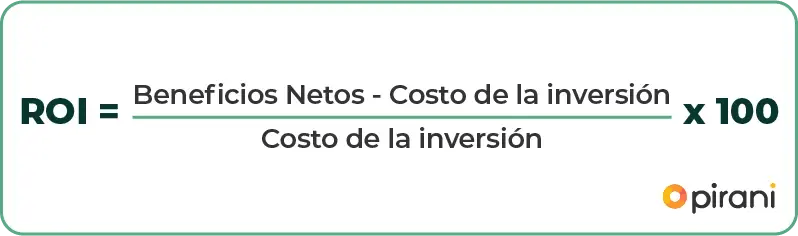
To better understand this formula in the field of risk management, it is important to break down its key components:
Most companies tend to view risk management as a necessary expense, but they don't always consider it a strategic investment. Therefore, calculating the ROI for risk management allows organizations to measure the financial benefits of their actions, making it clear that it's not just about meeting an obligation, but rather making a smart investment. This calculation helps them justify the budget, prioritize resources in key areas, and understand how preventive measures reduce losses, improve operational efficiency, and strengthen their competitiveness in the market.
Calculating ROI in risk management requires considering several components that impact both costs and benefits. These include:
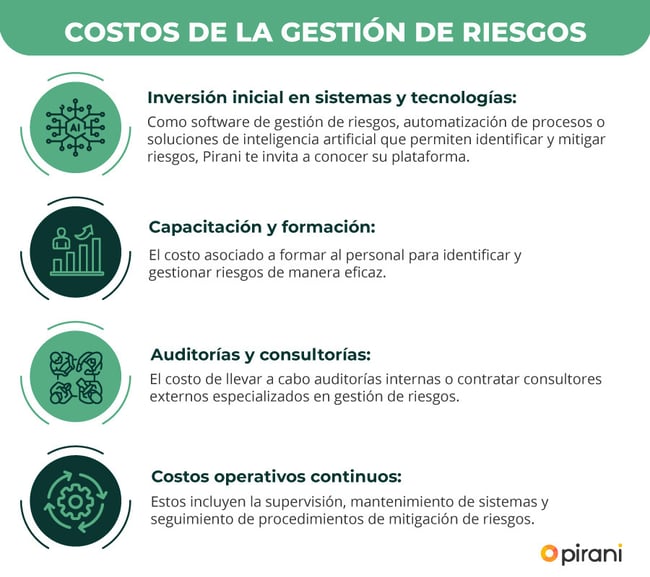
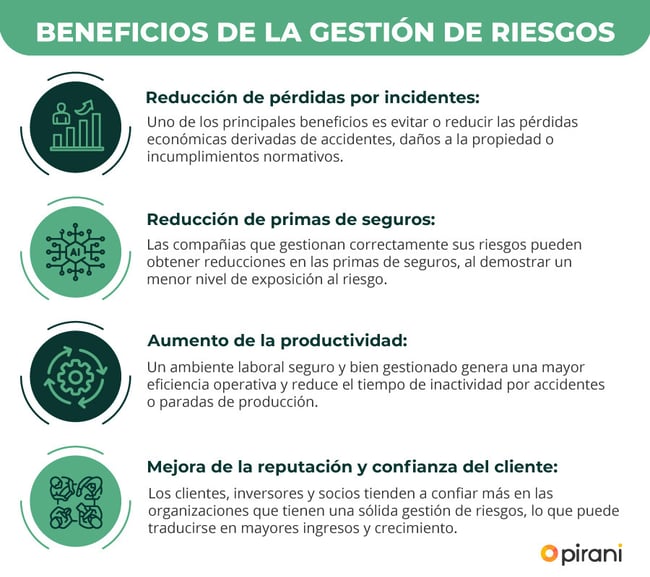
Various methodologies can be employed that offer complementary approaches. Cost-Benefit Analysis (CBA) It is a key technique that directly compares the costs of implementing risk management measures with the benefits obtained, allowing for a clear assessment of cost-effectiveness.
Risk simulation models, such as the Monte Carlo analysis, provide a probabilistic view of how different risk scenarios can affect financial results, facilitating investment evaluation under conditions of uncertainty.
On the other hand, the Expected Value Assessment (EVE) calculates the expected monetary value of mitigating specific risks by assigning probabilities and costs to risk events, providing a quantitative perspective on the value of risk management investments. Each methodology offers a way to measure and justify the return on investment in risk management, adapting to different organizational contexts and needs.
Cost-benefit analysis is a basic but effective technique that evaluates all the costs and benefits of an investment in risk management. The objective is to quantify the financial benefits, such as reduced claims or improved efficiency, versus the implementation costs.
Another advanced methodology is risk simulation, which uses techniques such as Monte Carlo analysis to model the financial impact of various risk scenarios. This technique allows companies to visualize how different levels of investment in risk management can affect their financial results.
EVE is a technique that focuses on calculating the expected monetary value of risk management outcomes. Different potential risk events are evaluated, and probabilities and costs are assigned to each, allowing the total value of mitigated risks and, consequently, ROI to be determined.
If you want to know more about methodologies to calculate ROI, we invite you to read the following article on how to quantify risks to make decisionsThis will allow you to make more informed decisions and avoid financial loss or reputational damage.
Risk management ROI calculation case studies demonstrate how various industries apply these metrics to assess the financial impact of their investments in risk mitigation measures.
For example, in the manufacturing sector, an investment in safety systems can result in a significant reduction in accidents and related losses, demonstrating a positive return in terms of avoided costs and operational improvements.
Similarly, in the financial sector, implementing advanced fraud prevention technologies can prevent multi-million-dollar losses and regulatory fines, providing clear evidence of the economic value that risk management brings.
These examples help organizations understand that investing in risk management not only prevents damage and loss, but also contributes to profitability and operational efficiency, justifying the investment in these preventive strategies.
To better illustrate the concepts, let's consider some examples of how companies can calculate the ROI of their risk management efforts:
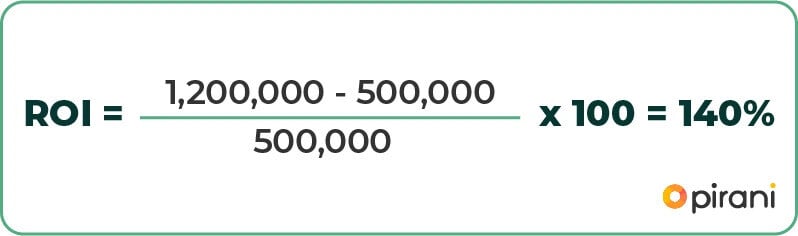
A manufacturing company invests in a risk management system to improve safety in its production plant. The total implementation cost of the system is $500,000. In the first three years, the company reduced workplace accidents by 50%, avoiding $1,200,000 in costs from accidents, compensation, and production downtime.
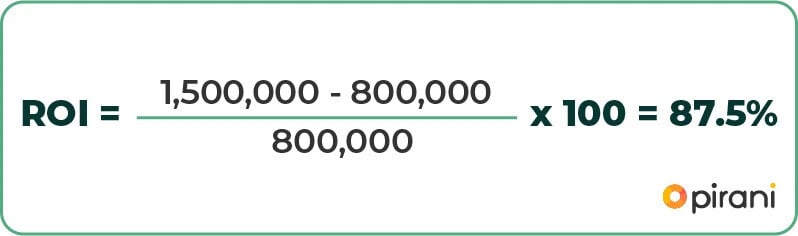
A bank invests in technologies to prevent fraud and mitigate operational risks. The implementation cost is $800,000, but in one year, the bank avoids losses of $1,500,000 related to fraud and regulatory fines.
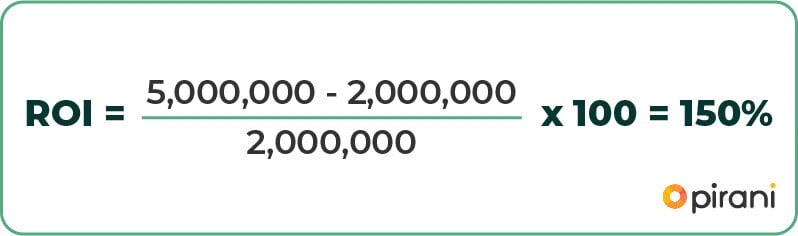
For an energy company, implementing advanced technologies for leak detection and environmental risk management can be costly. Suppose the company invests $2,000,000 in leak monitoring and prevention systems at its facilities. By preventing leaks that could have caused environmental damage and regulatory fines of $5,000,000, the company achieves an ROI of:
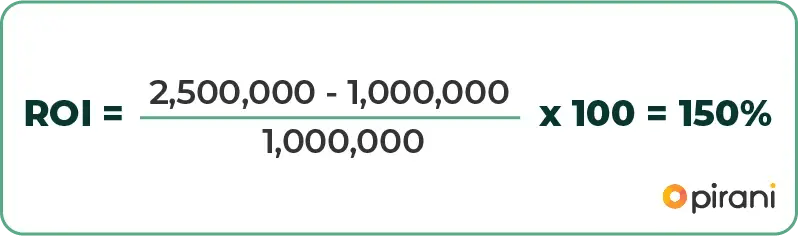
A hospital invests $1,000,000 in a risk management system to improve patient safety and reduce medical errors. Implementing the system reduces costs associated with lawsuits and medical errors by $2,500,000 in one year. The ROI on this investment would be:
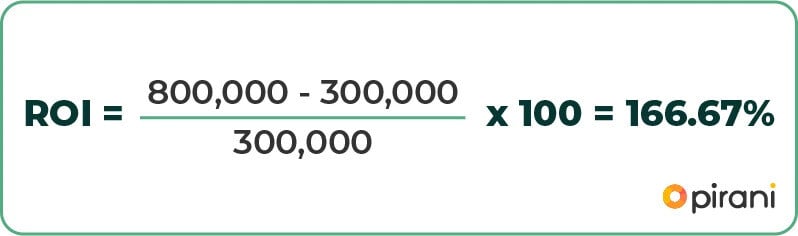
A retailer implements a risk management system to improve store security and reduce internal and external theft. The initial investment in the security system and staff training is $300,000. During the first year, the retailer reduces theft losses by $800,000, showing an ROI of:
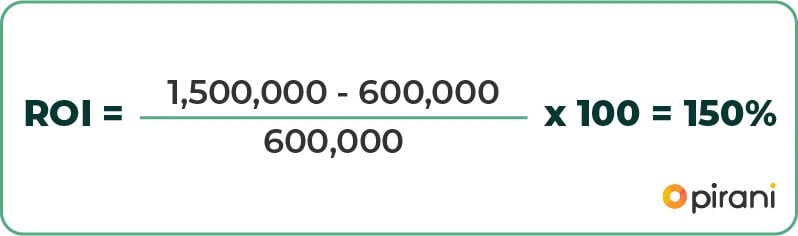
A technology company invests $600,000 in a cybersecurity system to protect against cyberattacks and data loss. Thanks to this investment, it prevents an attack that could have cost $1,500,000 in data loss and recovery. The ROI for this investment is:
One of the main obstacles is the difficulty in quantifying intangible benefits, such as an improved reputation or increased customer confidence, which are not always directly reflected in financial metrics. Furthermore, the variability of unexpected events and the dynamic nature of risks can make projections and calculations uncertain and prone to change. These challenges require a rigorous and flexible approach to properly assess the impact of investments in risk management and adjust strategies based on changing conditions.
Calculating ROI in risk management presents several challenges. Among the most notable are:
Quantification of intangible benefits: Benefits such as improved reputation or customer confidence are difficult to measure financially, making it difficult to fully assess the impact of risk management.
Variability of unexpected events: The unpredictable nature of certain risks and their impact on the company can make ROI calculations uncertain and difficult to predict accurately.
Hidden costs: Some costs associated with risk management, such as those related to ongoing training or adapting to new regulations, can be difficult to identify and quantify.
Changes in the risk environment: Market conditions and the risk environment may change over time, affecting the validity of initial projections and requiring ongoing adjustments to the risk management strategy.
Measuring Long-Term Results: The benefits of risk management investments can take time to materialize, making short-term ROI difficult to measure and requiring extended monitoring to assess their full effectiveness.
ROI in risk management goes beyond being a simple financial measure; it becomes an essential strategic tool for organizations to evaluate and demonstrate the tangible value of their investments in risk mitigation. By calculating ROI, companies are able to justify the resources invested in risk management, prioritize their efforts based on expected benefits, and optimize resource allocation to maximize both protection and performance. This metric offers a clear view of the positive impact on loss reduction, improved operational efficiency, and strengthened corporate reputation. It thus ensures that risk management is aligned with strategic objectives and contributes to the organization's sustainable growth.
https://www.piranirisk.com/es/academia/especiales/como-medir-el-roi-en-la-gestion-de-riesgos