
From reactive management to intelligent prevention
How EHSQ systems evolve when data ceases to be records and becomes signals for prevention.
For many years, occupational health and safety management was primarily associated with a reactive approach: recording accidents, investigating causes, preparing reports, and then checking whether corrective actions had been implemented. This model remains necessary, but it is insufficient for organizations with multiple facilities, contractors, processes, equipment, and regulatory requirements.
The modern question is no longer just “what happened?”. It’s also: what signals were available before the event?, what controls were expired?, what findings were recurring?, what actions had been open for too long? This transition represents one of the most important changes in EHSQ: moving from managing events to managing risks proactively.
The ILO defines occupational safety and health as a system integrated into organizational management and based on planning, implementation, evaluation, and continuous improvement. Digitalization can strengthen this system, but it does not replace it.
The problem isn't having data: it's turning it into management.
In an organization, EHSQ information can be scattered across spreadsheets, forms, emails, photos, folders, and various applications. The challenge arises when management needs to respond quickly: What critical risks are recurring? What actions are overdue? Which areas are experiencing deviations? What training is about to expire?
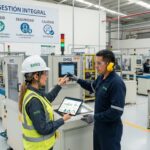
Digitizing doesn't simply mean replacing paper with a screen. It means building traceability around the process. An inspection should be able to become a finding; the finding, an action; the action should have an assigned person, date, and evidence; and the closure should provide feedback and lessons learned.
From reactive indicator to preventive indicator
Accident, injury, and illness indicators describe past outcomes. They remain essential, but an organization that only looks at those outcomes is already behind.
Leading indicators allow us to observe whether safety activities are working: inspections performed, actions taken, critical controls verified, training conducted, observations, and other operational signals. OSHA emphasizes the value of leading indicators in detecting potential problems and strengthening safety and health programs.
The goal is not to replace reactive indicators, but to complement them with signals that allow for earlier intervention.
Where does EHSQ Mantis come in?
EHSQ Mantis integrates Safety, Health, Environment, and Quality into a modular platform. Its official website describes more than 35 tools, a mobile application with offline functionality, field inspections, findings, training, audits, alerts, indicators, and reports.
The value lies in connecting the flow: field → record → finding → responsible party → action → evidence → verification → indicator.
Once this information is structured, the organization can move from simply archiving records to using them as preventative inputs. Mantis also allows for the centralization of processes by location, country, region, or branch, facilitating the implementation and maintenance of ISO systems.
IoT and artificial intelligence: a new layer of prevention
Sensors, connected devices, and IoT can provide information about operating conditions, equipment, and environmental variables. AI can help classify information, summarize records, detect recurring patterns, and facilitate queries.
But technology does not eliminate risk on its own. Its value depends on the quality of the data, the context, and how the results are incorporated into professional decision-making. The ILO, in its 2025 global report on AI and digitalization, highlights important opportunities, but also new risks that require preventive, participatory, and evidence-based approaches.
The future of EHSQ will not be less human. It will be more connected: technology brings speed, traceability, and analysis; people bring experience, context, and judgment.